As the COVID-19 pandemic descended upon the United States, the ever growing need for Personal Protective Equipment (PPE) became more apparent by the day. We read the news stories, we heard from nurses that we knew, and we had an understanding of the supply chain delays that would continue for months as Asian manufacturing slowly re-opened and began to catch-up with their backlog of orders. So we began to find answers to our questions on how we could pivot and put our experience and raw materials to better current use to support our frontline workers and help to provide products that would reduce the strain on medical grade PPE needs.
As a company, we have seamstresses with decades of experience, hundreds of yards of fabric on hand, and a multitude of current projects that were put on hold overnight. So we reached out to Presbyterian/St. Luke’s Medical Center in Denver, CO and Legacy Health in Portland, OR to discuss the materials we had on hand, our manufacturing process, and to see if the products and volume we were producing would fit the needs of the hospitals. From those conversations, the volume we could produce and the lack of N95 certification testing to meet medical grade equipment lead to the decision that we were not the right fit for the hospital staff.
From those conversations with medical procurement staff, was bred the next idea in how we could help with the needs of the hospital staff and the general public. To produce washable, reusable, masks for personal use by the public, which would help to ease the demand on N95 medical grade masks. So we used the information provided by Vanderbilt Medical and Emory Healthcare, along with knowledge obtained in our conversations with Presbyterian/St. Luke’s and Legacy Health, to inform our decisions about the materials and construction that would provide for the best use product.
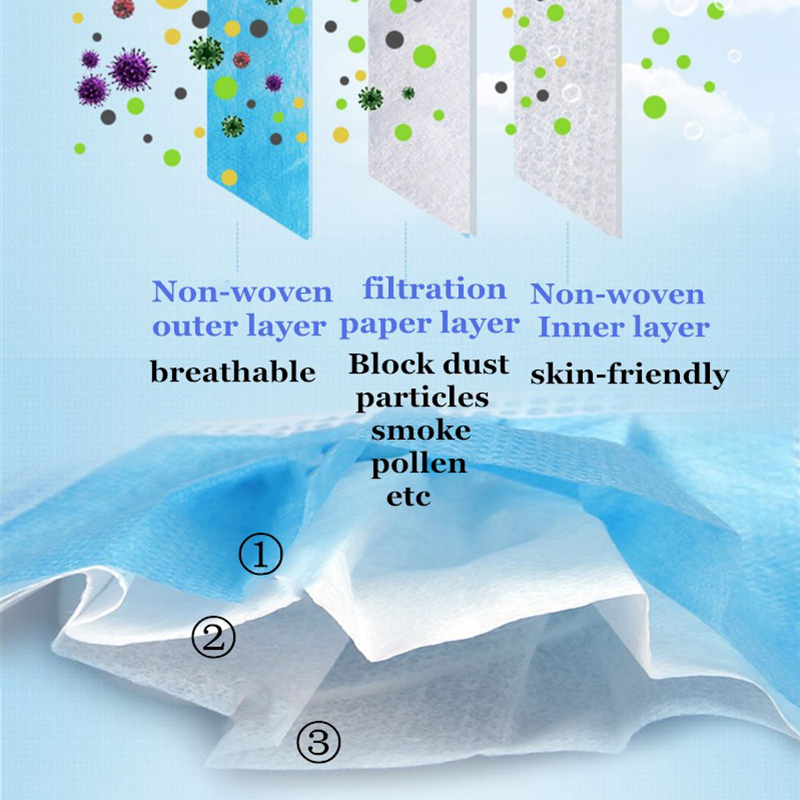
Both Vanderbilt and Emory recommended a two layer mask, utilizing a tight weave cotton. We ended up going with a three layer mask, which increased the particulate filtration ratio. In the construction we use:
The exterior poly/cotton is used for the exterior layer, allowing us to produce the custom dye sublimation graphics while still gaining higher filtration rating. The 7oz duck cloth lining is a dense weave cotton fabric with a much higher filtration rate than standard cotton t-shirts, and tests high in filtration testing. The backing is another poly/cotton, and while a different blend than the expo fabric for the front, provides a soft feel while being worn, while still providing a higher filtration rating. By utilizing a three layer construction with materials that have high filtration ratings and improved breathability we were able to develop a mask that is far superior to common 1 and 2 layer masks on the market.
We then moved into the physical design of the mask. We wanted a mask design that utilized 1 panel construction on each layer, thus eliminating stitching two panels together down the middle of the mask. Common two panel masks that have a seam down the center of the face, create additional holes at the high risk area from your nose down to your mouth. When dealing with extremely small particulates, any additional needle points into the fabric create extra holes for contaminants to escape and enter through. So we went with a 1 piece contoured pattern with fold over darts on the nose bridge and the chin. This design removed the unnecessary seam down the middle of the mask, while still allowing for a good face contour fit.
We added in a galvanized wire to the nose piece to allow for better form fitting to the face. We went with a 15 gauge wire to allow it to hold up to reshaping multiple times, but not so heavy that is was difficult to bend around the nose. We utilized a galvanized wire so that it would not rust when the mask was washed and dried.
Finally we looked at the way the mask attached to your face. There are a few options that are currently out there, no-sew, elastic, and ribbons. We manufactured samples with both elastic and ribbon’s and sent them out to nurses, construction workers, stay-at-home parents, and essential employees who still had to go into the office.
- While the no-sew is nice that it is part of the same cut of fabric, it does create issues of fraying around the cut edges. This would create a need to have extra fabric left in the cut that is then folded over and sewn to clean up and reinforce. Even with this process when the joint to the mask itself becomes stressed the fabric can tear, and a no-sew joint is not easy to repair.
- Elastic is great for its ability to be a quick on and off use of the mask. But it can be too tight on certain head sizes, causing it to pull on the ears constantly. Or it can be too large, causing the mask not to fit tightly enough for efficient filtration benefits. Even when the elastic fits well, for those that have to wear the mask all day, or even for a few hours straight, it will rub on the ear, causing irritation and raw skin exposure. To alleviate this, nurses and frontline responders have had to resort to using ear savers or wear additional headbands with buttons on them, to make the mask comfortable enough for all day use.
- From our sample group, the resounding response was that they preferred the ribbon ties for the flexibility that the ribbon provided. You could tie them into loops similar to elastic to use for frequent on and off use, but these loops would be sized to fit each individuals face. You could manually tie them around your head each time you needed to wear the mask. You could get side release buckles to allow for an easy on/off use while maintaining a tight fit all day. Or you could go with a cord locks providing a similar function to the side release buckles, but with fewer components and easier adjustment each time you wear the mask.
We go into more detail on how you can utilize each of the ribbon tie functions in this post.
Overall, we spent considerable time in our research, testing and development to ensure that we were providing a quality product. One that was constructed of higher particulate filtration materials, had a sturdy construction, and allowed for flexibility in its many needed uses. We hope this helped to provide more insight into how we came to our final design decisions. While this is our current design, we are always thinking on and testing modifications to improve the mask with each version. So feel free to send us your thoughts and feedback on how we can improve the product.